
Ocean Wave Hearing · Corpus Christi, TX
7 Benefits of Rechargeable Hearing Aids
Rechargeable hearing aids use built-in batteries that you charge overnight, like a phone, so you don't have to buy and change tiny disposable batteries. They come in several styles, and many pair with features like Bluetooth. Whether they suit you depends on your hearing and daily routine.
By Ruben C. Cavazos, Jr., MS, HIS · Hearing instrument specialist, Ocean Wave Hearing, Corpus Christi
Quick answer: Rechargeable hearing aids use built-in batteries that you charge overnight, like a phone, so you don’t have to buy and change tiny disposable batteries. They come in several styles, and many pair with features like Bluetooth. Whether they suit you depends on your hearing and daily routine.
Choosing a hearing aid is not only about improving your ability to hear — it is also about finding a device that fits comfortably into your daily routine. With advancements in hearing technology, rechargeable hearing aids have become one of the most popular choices for people looking for convenience, reliability, and modern features.
Unlike traditional hearing aids that require frequent battery replacements, rechargeable models allow users to simply charge their devices overnight and use them throughout the day. This makes them easier to manage, especially for people with busy lifestyles.
If you are exploring hearing solutions, understanding the benefits of rechargeable hearing aids can help you decide whether this technology is right for your needs.
What Are Rechargeable Hearing Aids?
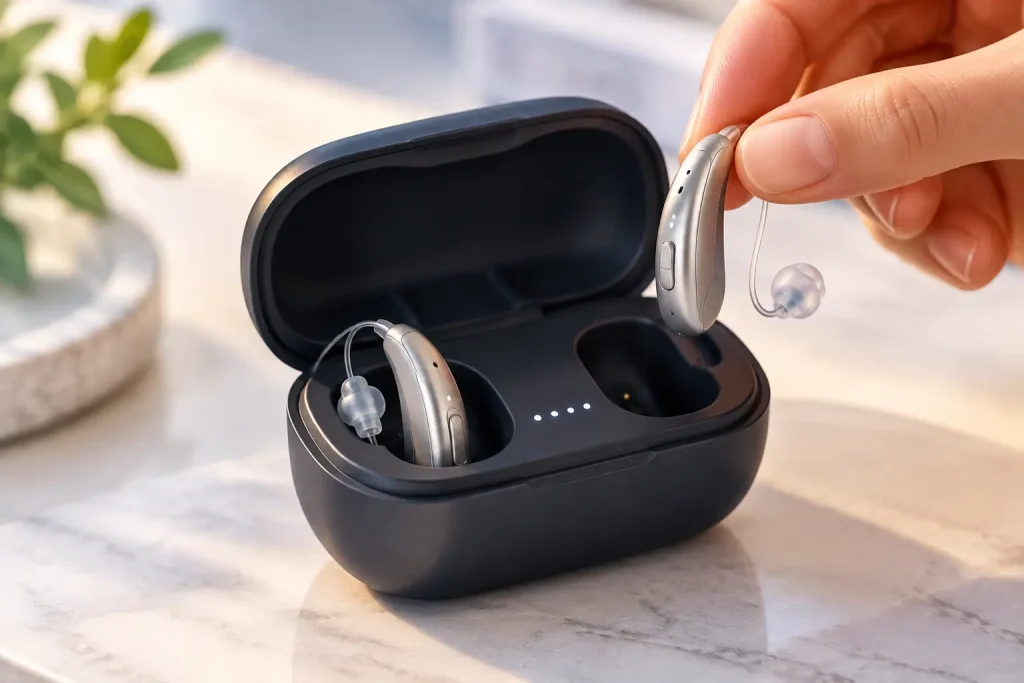
Rechargeable hearing aids are digital hearing devices that use built-in rechargeable batteries instead of disposable zinc-air batteries. Users can place their hearing aids into a charging station when not in use, similar to charging a smartphone.
Modern rechargeable devices combine advanced sound processing technology with convenient power solutions. They are available in different styles, including behind-the-ear (BTE), receiver-in-canal (RIC), and in-the-ear (ITE) designs.
You can also learn more about how hearing aids work and how modern devices process sounds to improve everyday listening experiences.
What Are the Benefits of Going Rechargeable?
1. No Need to Replace Batteries Frequently
One of the biggest advantages of rechargeable hearing aids is eliminating the hassle of constantly buying and changing small disposable batteries.
Traditional hearing aids require users to keep spare batteries available and replace them regularly. Rechargeable models simplify this process — place the device in the charger overnight, and it is ready for the next day.
This convenience is especially helpful if you find tiny batteries fiddly to handle.
2. Easy Daily Charging and Better Convenience
Rechargeable hearing aids are designed for simple everyday use.
Most users follow a simple routine:
- Wear hearing aids during the day
- Place them in the charger at night
- Start the next day with fully charged devices
This charging routine is similar to using other modern electronics, making the technology easier to adopt.
3. Reliable Rechargeable Hearing Aid Battery Life
Battery performance is an important factor when choosing a hearing device.
Many modern rechargeable hearing aids are designed to provide enough power for a full day of typical hearing activities, including conversations, phone calls, and other listening situations.
However, rechargeable hearing aid battery life can vary depending on:
- Device model
- Bluetooth usage
- Streaming time
- Volume settings
- Battery age
Your hearing professional can help you choose a device based on your lifestyle and daily needs.
4. Cost Savings Over Time
Although rechargeable hearing aids may have a higher initial cost, they can reduce ongoing expenses because you do not need to regularly purchase disposable batteries.
Over time, avoiding frequent battery purchases can make rechargeable devices a practical option for many users.
If you are comparing costs and options, our guide on whether hearing aids are worth it can help you understand the value of investing in hearing technology.
5. Environmentally Friendly Choice
Rechargeable hearing aids create less waste compared to disposable battery-powered devices.
Since users do not need to throw away batteries every few days or weeks, rechargeable technology can be a more sustainable hearing solution.
For people looking for convenient technology with reduced environmental impact, rechargeable devices are an attractive option.
6. Advanced Features Like Bluetooth Connectivity
Many modern Bluetooth rechargeable hearing aids offer wireless connectivity with smartphones and other devices.
Depending on the model, users may enjoy features such as:
- Direct phone call streaming
- Music streaming
- Smartphone adjustments
- Wireless accessories
These features make hearing aids feel more connected to modern lifestyles.
7. Easier Handling
Small batteries can be fiddly to handle and easy to drop.
Rechargeable hearing aids provide a simpler experience because there is no need to open battery compartments or handle tiny battery cells regularly.
A simple charging routine can make daily hearing aid use more comfortable and convenient.
Rechargeable Hearing Aids vs Battery Hearing Aids
Both rechargeable and traditional battery-powered hearing aids can provide effective hearing support.
The right choice depends on your preferences:
| Rechargeable Hearing Aids | Traditional Battery Hearing Aids |
|---|---|
| Charge overnight | Replace batteries regularly |
| More convenient daily use | Requires spare batteries |
| Less battery waste | More disposable waste |
| Easier to handle | Familiar technology |
If you want to explore different device styles, check our guide on different types of hearing aids.
Are Rechargeable Hearing Aids Right for You?
Rechargeable technology is a great option for people who value convenience, easy maintenance, and modern features.
They may be a good choice if you:
- Prefer simple daily routines
- Use hearing aids throughout the day
- Want fewer battery replacements
- Enjoy smartphone connectivity
- Prefer modern hearing technology
However, the best hearing aid depends on your hearing loss level, lifestyle, comfort preferences, and professional recommendations.
What’s the Bottom Line on Rechargeable Hearing Aids?
The growing popularity of rechargeable hearing aids comes from their combination of advanced technology, convenience, and ease of everyday use. From avoiding frequent battery replacements to enjoying features like Bluetooth connectivity and simple overnight charging, rechargeable devices can make hearing support more comfortable and hassle-free.
Choosing the right hearing aid depends on your hearing needs, lifestyle, and personal preferences. A hearing professional can help you understand which features and device style are best suited for you.
At Ocean Wave Hearing, we help you explore modern hearing solutions designed around your lifestyle. If you are considering rechargeable hearing aids, contact our hearing specialists today to discuss your options and find a device that helps you stay connected to the people and moments that matter most.
Frequently Asked Questions
Most rechargeable hearing aids are designed to provide power throughout the day, but battery performance depends on usage, features, and device model
Rechargeable hearing aids are often preferred because they are easier to maintain, but the best choice depends on individual hearing needs.
Many modern rechargeable hearing aids include Bluetooth connectivity for smartphones and other devices.
Most users charge their hearing aids every night to ensure they are ready for daily use.
Sources
- Types of Hearing Aids, U.S. Food and Drug Administration (FDA)
- Hearing Aids, National Institute on Deafness and Other Communication Disorders (NIDCD), NIH